

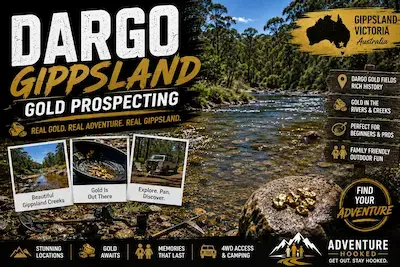
Gold Prospecting Dargo Victoria: Complete Gold Detecting & Gold Panning Guide
Is one of Gippsland's most iconic destinations for outdoor adventure. Known for its rugged mountain tracks, historic mining settlements and crystal-clear rivers, the area continues to attract recreational prospectors searching for alluvial and reef gold.
From historic mining settlements like Grant to the waterways that once produced alluvial gold, Dargo offers a unique mix of prospecting, camping and High Country adventure. Whether you're chasing your first gold flake or exploring Victoria's famous goldfields, this guide covers everything you need before planning your trip.
Whether you're swinging a metal detector over old diggings or spending a relaxing afternoon panning along a mountain creek, Dargo offers an unforgettable experience for beginners and experienced prospectors alike.
In this guide, we'll explore the best areas around Dargo for gold prospecting, where detecting and panning may be possible, what equipment you'll need, and how to prospect responsibly while protecting Victoria's historic goldfields.
Adventure Hooked Tip: Always check current land access, mining restrictions and permit requirements before prospecting.
Why Dargo Is Popular for Gold Prospecting
During Victoria's gold rush, the Dargo district supported numerous mining operations that worked both reef gold and rich alluvial deposits. Many of the original workings remain visible today, providing fascinating reminders of the area's mining heritage.
Prospectors continue to visit the region because of its:
- Historic goldfields
- Remote bush setting
- Numerous creeks and rivers
- Old mining camps
- Scenic camping opportunities
- Four-wheel-drive access to historic sites
While modern prospecting requires patience and persistence, the Dargo region still rewards those willing to research historic workings and spend time exploring suitable areas.
Best Areas Around Dargo for Gold Prospecting
Crooked River
The Crooked River is one of the most recognised gold-bearing waterways in the Dargo region. Historic mining activity occurred along many sections of the river, with miners recovering significant quantities of alluvial gold during the gold rush era.
Today, recreational prospectors often visit accessible sections of the river to pan for fine gold and search nearby historic workings with metal detectors where permitted.
Common finds may include:
- Fine flour gold
- Small flakes
- Picker-sized nuggets (less common)
Because river conditions change after floods, new material can occasionally become exposed.
Grant Historic Area
The historic township of Grant was once home to a thriving mining community.
- Visitors can still explore:
- Historic diggings
- Old race lines
- Mine sites
- Heritage remains
This makes the surrounding area particularly interesting for history enthusiasts as well as recreational prospectors.
Always ensure you understand where prospecting is permitted and avoid disturbing protected heritage features.
Dargo River
Several sections of the Dargo River have a long association with alluvial gold.
Prospectors commonly search:
- Gravel bars
- Inside bends
- Exposed bedrock
- Natural cracks and crevices
These locations can trap heavier material, including gold, after seasonal water flows.
Tributary Creeks
Many smaller creeks flowing into the Crooked River and Dargo River were historically worked by miners.
Researching old mining maps and historical records can help identify locations that may have supported previous mining activity.
Remember that land status varies, so always confirm access before entering an area.
Gold Detecting Around Dargo
Metal detecting can be an exciting way to search for gold around historic diggings and old mining camps.
Experienced detectorists often focus on:
- Old mullock heaps
- Shallow diggings
- Dry gullies
- Hillsides near historic workings
- Exposed bedrock
Success depends on many factors including:
- Ground mineralisation
- Detector settings
- Coil choice
- Research
- Persistence
Beginners should spend time learning how their detector responds to Victoria's mineralised soils before expecting consistent results.
Gold Panning Tips
Gold panning remains one of the easiest and most affordable ways to start prospecting.
Look for:
- Black sands
- Heavy gravel
- Bedrock crevices
- Inside river bends
- Natural rock traps
Take your time and process material slowly, as even tiny flakes of gold can be easily washed away with poor technique.
For more gold prospecting info head to our gold prospecting gear and gold prospecting locations
Gold Prospecting Permits in Victoria
Before heading out to the Dargo goldfields, make sure you're prospecting legally.
In Victoria, recreational gold prospecting generally requires a current Miner's Right, which allows you to search for gold on certain Crown land where prospecting is permitted. It does not allow prospecting on private property without the landowner's permission or in areas where prospecting is prohibited.
Always check the latest regulations before your trip, as land access and rules can change.
Adventure Hooked Tip: Keep a digital and printed copy of your Miner's Right with you whenever you're prospecting.
Best Equipment for Gold Prospecting Around Dargo
The Dargo region offers a mix of rivers, creeks, old diggings and mineralised ground, so having the right equipment can improve your experience.
Essential Gold Panning Gear
- Gold pan
- Classifier sieve
- Small shovel
- Snuffer bottle
- Tweezers
- Bucket
- Crevicing tools
Best Gold Panning Kits for Beginners
Gold Detecting Equipment
If you're planning to search old diggings and dry gullies, consider taking:
- Gold detector
- Pick with strong magnet
- GPS or offline maps
- Spare batteries
- Headphones
- Coil cover
- Backpack
- Drinking water
- Hat - Cap
- Sunscreen - Slip slop slap
- Back up food
Best Gold Detectors for Australia
Camping Gear
Many visitors turn their prospecting trip into a weekend adventure.
- Consider bringing:
- Tent or caravan
- Camp chairs
- Portable BBQ
- First aid kit
- Recovery gear if travelling by 4WD
- Satellite communicator or emergency beacon for remote areas
Best Camping Gear
Family Camping Checklist
Essential 4WD Recovery Gear
Camping Around Dargo
One of the best parts of prospecting in the Dargo region is the opportunity to camp close to nature.
Popular camping areas include locations along the Crooked River and throughout the surrounding High Country.
Camping allows you to:
- Prospect early in the morning.
- Explore multiple creeks.
- Enjoy campfires where permitted.
- Experience the stunning mountain scenery.
Always follow local fire restrictions and leave campsites cleaner than you found them.
Safety Tips
The Victorian High Country is beautiful but remote.
Before leaving:
- Tell someone where you're going.
- Carry plenty of water.
- Check weather forecasts.
- Watch for snakes during warmer months.
- Take a quality first aid kit.
- Avoid flooded creek crossings.
- Carry recovery equipment if travelling on remote tracks.
- Download offline maps before losing mobile reception.
Can You Still Find Gold Around Dargo?
Yes - but realistic expectations are important.
Many prospectors continue to recover small flakes and occasional nuggets in the wider Dargo district. Success depends on:
- Research.
- Time spent in the field.
- Choosing productive locations.
- Using suitable equipment.
- A little luck.
While nobody can guarantee you'll find gold, the area remains one of Victoria's most enjoyable destinations for recreational prospecting.
Dargo has always been one of Gippsland's most rewarding adventure destinations. The combination of rugged High Country tracks, historic mining areas and remote rivers makes it the perfect place for a weekend exploring with a detector, gold pan and camping setup.
Frequently Asked Questions
Do I need a Miner's Right?
- Yes. Recreational prospecting in Victoria generally requires a current Miner's Right. Always check the latest requirements before your trip.
Can I use a metal detector?
- Yes, where detecting is permitted and you hold the appropriate permission, such as a Miner's Right where applicable.
Is Dargo suitable for beginners?
- Yes. Dargo offers accessible creeks for gold panning and plenty of history, making it a great place for newcomers to learn.
What's the best time of year?
- Spring and autumn are popular due to milder temperatures. Summer can be hot, while winter may bring snow and difficult track conditions in higher elevations.
Can I camp near the prospecting areas?
- There are several camping areas throughout the Dargo region. Always check current access conditions and follow local regulations.
Conclusion
Gold prospecting around Dargo combines history, adventure and the excitement of discovering one of Australia's most famous gold regions. Whether you're panning in a mountain creek or detecting around historic workings, the area offers an unforgettable outdoor experience.
With the right preparation, suitable equipment and respect for the environment, a trip to Dargo can become one of the highlights of your Victorian gold prospecting adventures.